
The First Aid Kit That Saved a Caravan: 92 Pieces, 8,491 Reviews, One Unlikely Story
We earn commission from qualifying Amazon purchases. It costs you nothing and does not affect what we recommend.
A 92-piece first aid kit for £8.85 sounds like the kind of thing you throw in the car and forget about. Then one buyer, a nurse, used it to rescue a damaged caravan hookup cable with the tourniquet and a strip of bandage. That story tells you more about this kit than any spec sheet could.
Here is a story that almost nobody buying a first aid kit expects to tell. A nurse, driving home from a trip in her touring caravan, found that the electric hookup cable had separated from the car and been dragged along the road. She reached into her £8.85 General Medi mini first aid kit, pulled out the tourniquet and a strip of bandage, and improvised a repair that got her caravan lights working safely for the rest of the journey. The kit was supposed to patch up blistered heels and scraped knees. Instead, it rescued a bad day on the road.
That review sits among 8,491 ratings on Amazon UK, averaging 4.7 stars. The kit has sold over 4,000 units in the past month alone, holds an Amazon's Choice badge, and currently ranks number one in Camping and Travel First Aid Kits. We went through 100 of the most recent verified purchase reviews to find out why this particular red pouch has become the default first aid kit for UK campers, van lifers, Scouts and weekend walkers, and whether the £8.85 price tag hides anything worth knowing about.
The Caravan Hookup Story and What It Tells You
First aid kits are one of those camping purchases you hope to never use, which is exactly why most people buy the cheapest one they can find and shove it in the boot. The General Medi kit starts at £8.85 and looks like that kind of impulse buy. But the nurse's caravan story changes the framing.
She did not need plasters that day. She needed something strong enough to help bind the damaged hookup cable and keep her caravan lights working on the drive home. The fact that a 92-piece kit bought for general holiday use had a tourniquet and a bandage that held up well enough to manage the job says something about what General Medi have stuffed into this pouch. In her own words: "In 20 plus years of being a nurse I have never came across a kit that includes a tourniquet."
That story is an outlier, of course. Most buyers are using the cleansing wipes, plasters and scissors for grazed knees and festival blisters. But it hints at why a kit this cheap has climbed to the top of the category: the components are the kind that hold up when you actually need them, not just when you are ticking boxes on a packing list.
What Actually Lives Inside the Red Pouch
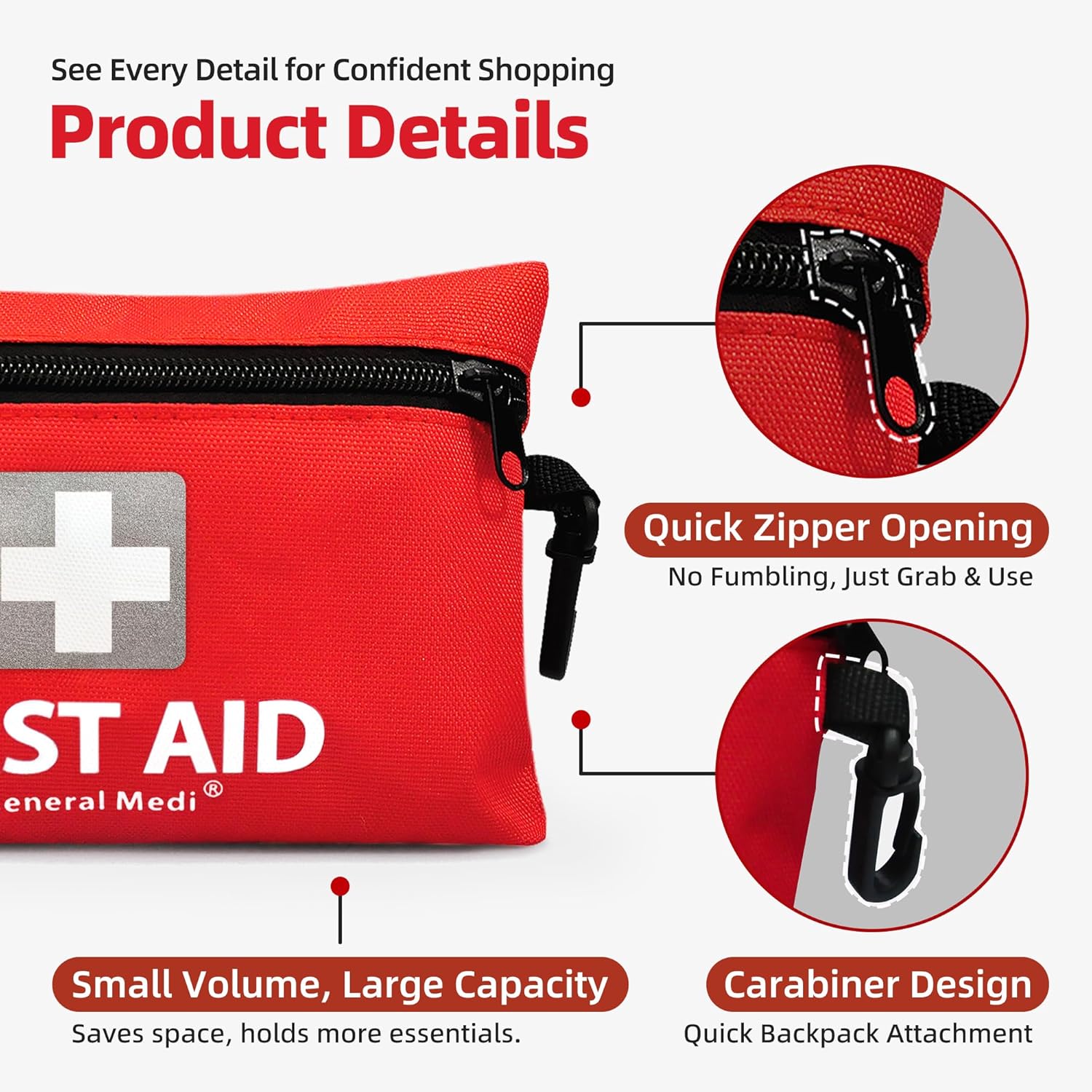
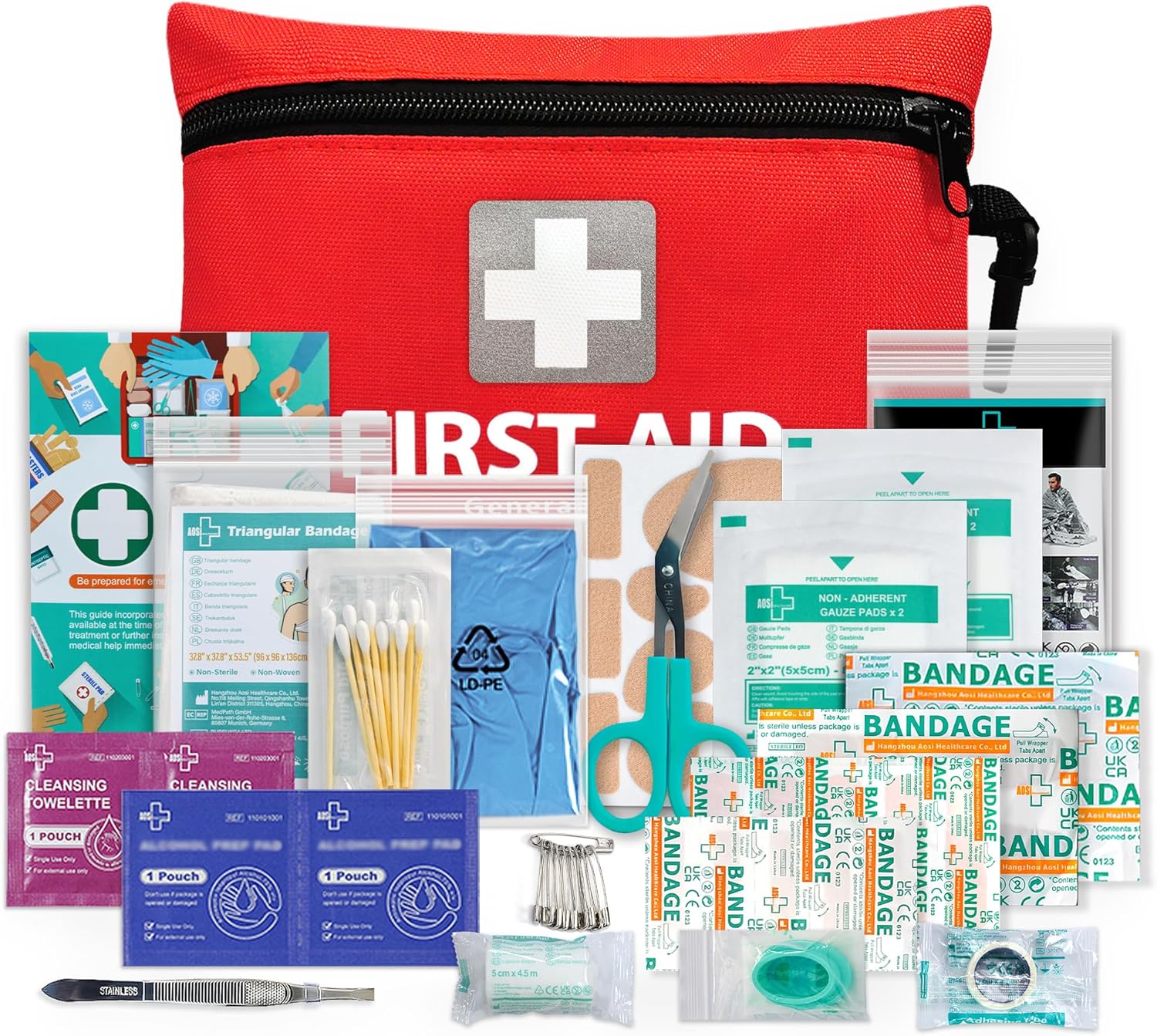
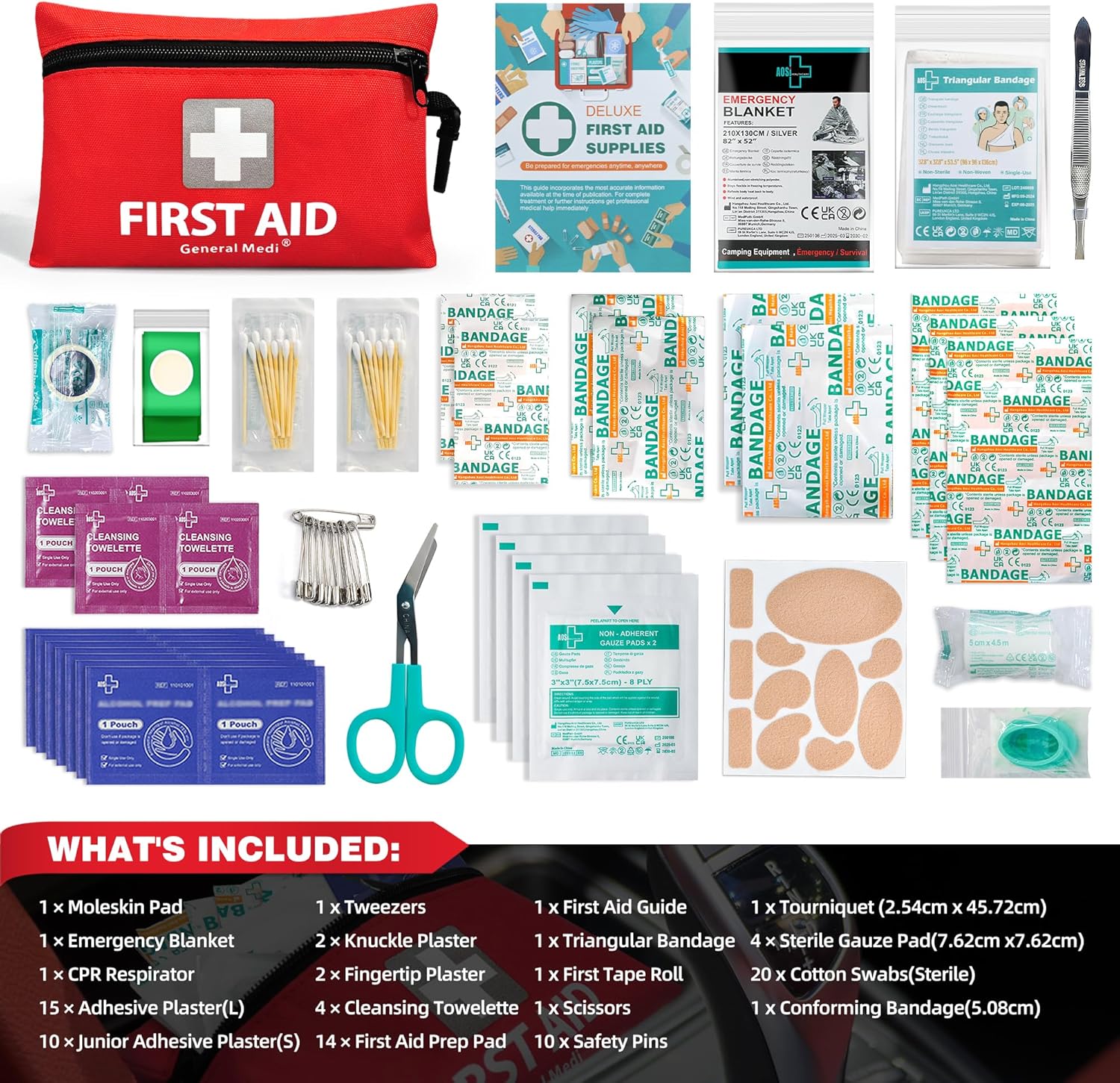
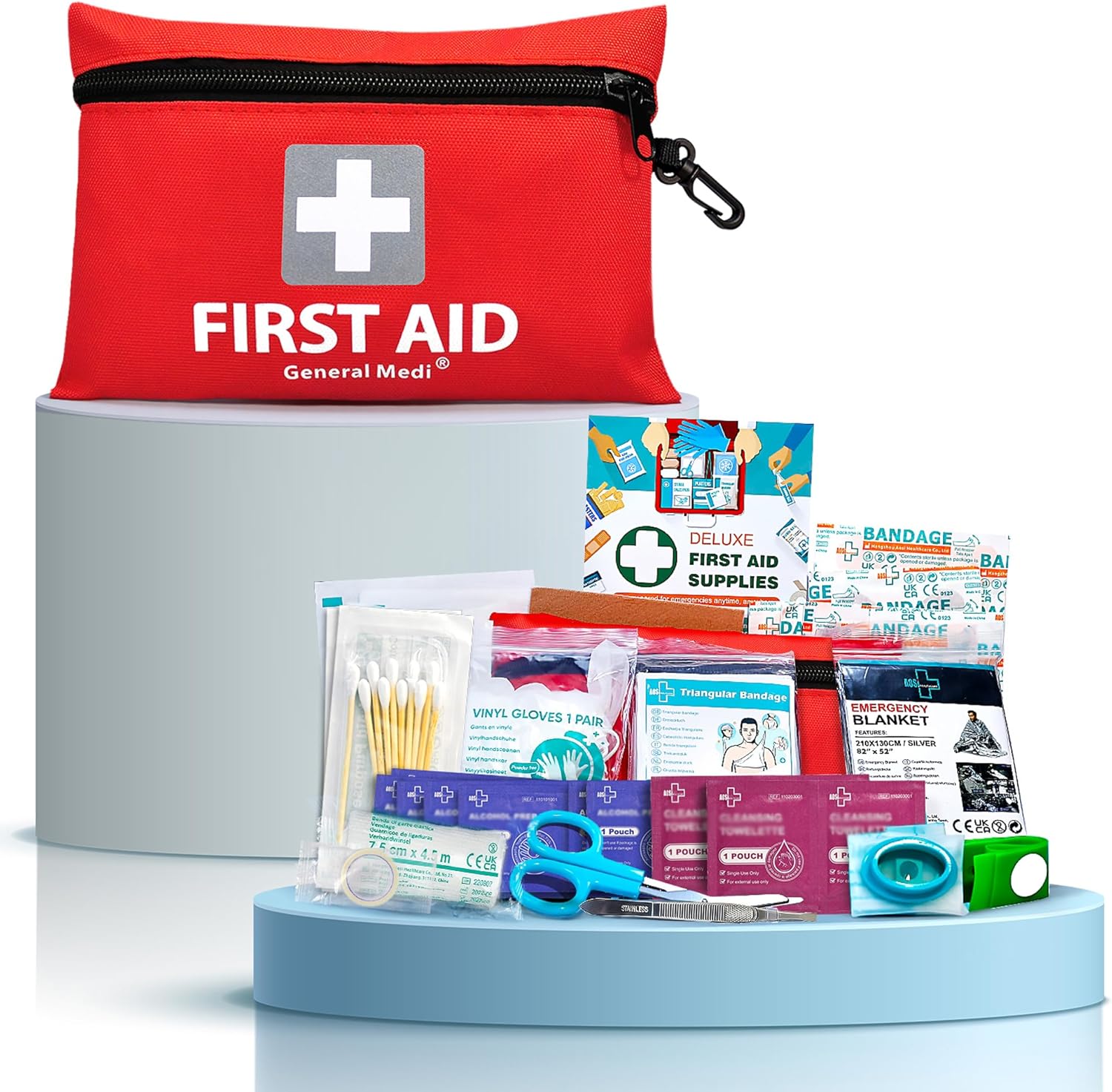
The 92-piece count sounds like one of those inflated marketing figures where a tiny bag of cotton swabs is counted as 20 items. Amazon's listing only explicitly names the scissors and the emergency foil blanket in the box breakdown, so we leaned on the reviews themselves to work out what actually lives inside. The verified pieces reviewers mention by name include scissors, tweezers, a tourniquet, a bandage strip, an emergency foil blanket, an eye wash vial, plasters in several sizes, cleansing wipes, and a printed basic first aid guide for anyone who freezes up in a real emergency. The rest of the 92-piece count is the usual padding of small consumables.
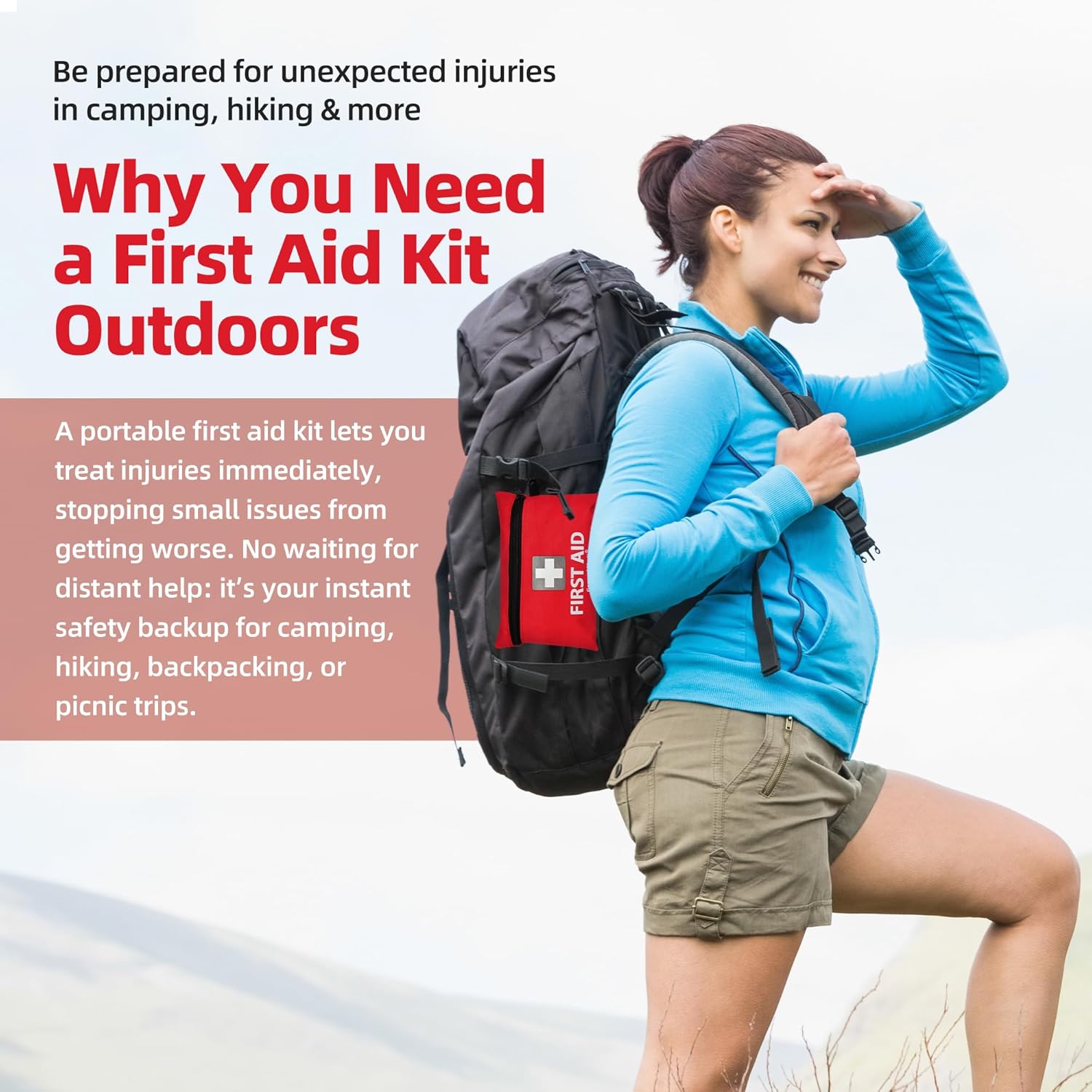
The pouch itself is nylon with a waterproof finish, measures 18 by 12 by 4 centimetres, and weighs 170 grams. There is a clip so you can snap it to a rucksack strap or the grab handle inside a camper van, which several reviewers call out as one of the better design touches. One reviewer even compared the zipper fit to repacking a Swiss Army knife: tight but manageable once you get the knack.
General Medi claims ISO13485, CE and FDA approvals, which are the certifications medical device manufacturers need to sell into regulated markets. That is not the same as hospital grade (despite the product copy calling it that), but it does mean this is not an unregulated bag of random plasters. The Transparency verified tag on Amazon also means the kit carries a code that confirms it came through the legitimate supply chain rather than a counterfeit backroute.
The Size Is the Whole Point
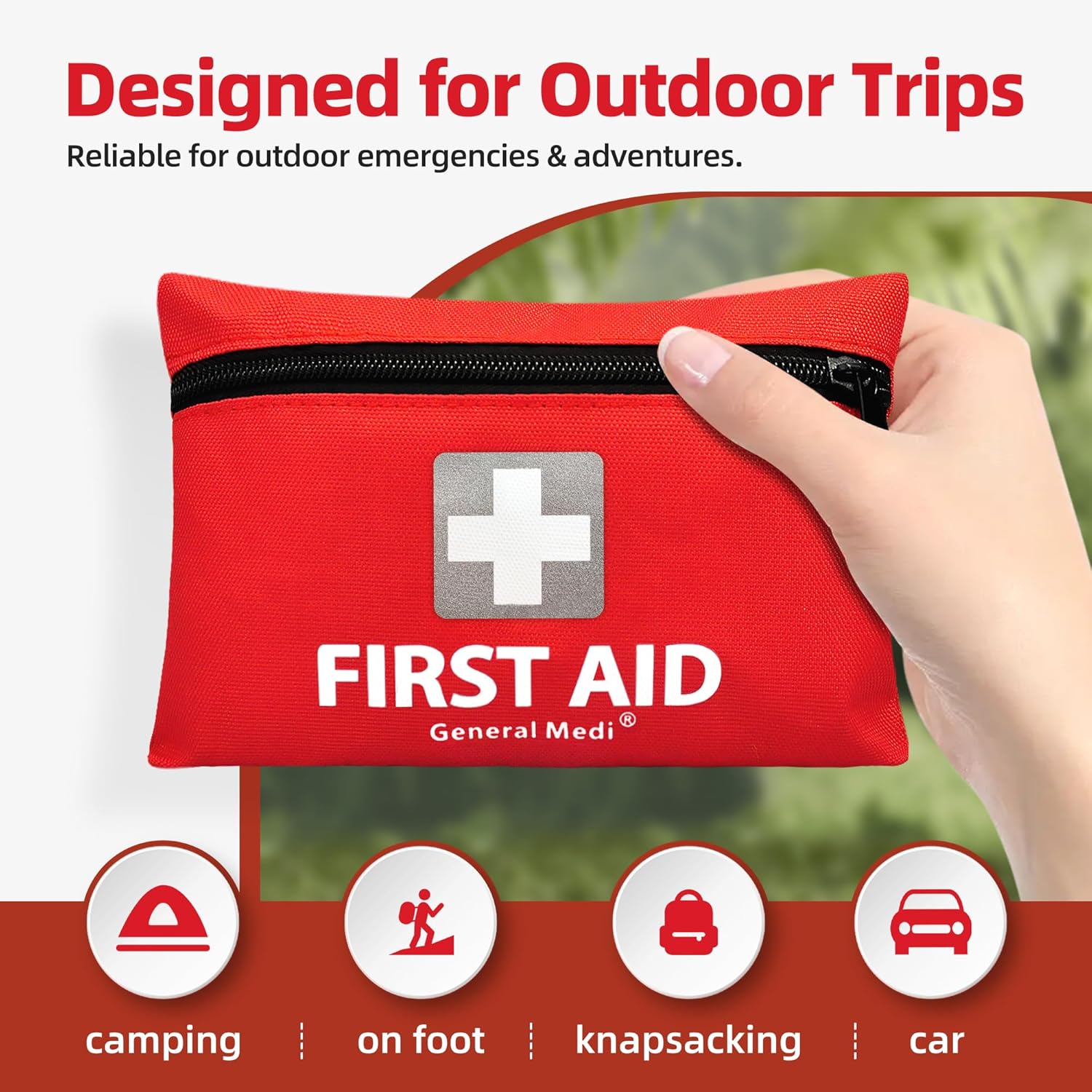
Look through the 100 most recent reviews and one theme dominates over all the others. People love how small it is. Not just compact, but small enough to vanish into a backpack pocket or glovebox and actually stay there for years without being in the way. Krissie, a five-star reviewer from March, called it "ideal for walkers, fits in your backpack dosent take up lots of room but has everything you need." Another buyer, DPmusicUk, bought it as the first piece of kit for a van conversion and said: "Well made, everything is in there you are going to need for adventures and diy days."
At 170 grams it weighs roughly the same as a small smartphone. For backpackers counting grams on a Lake District traverse, that matters. For families heading to a French campsite with a boot already packed to the ceiling, the 18 by 12 centimetre footprint means you can wedge it into the side pocket of a cool box and forget about it. One reviewer, Rhiannon, said she now keeps "one in the car, one in the change bag and one in the house", which is exactly the kind of casual multi-buying that tells you a product has hit its stride. Another, Mr D Phillips, bought one specifically to "put under the buggy".
The trade-off is that this is not a fully equipped trauma kit. There is no instant cold pack, no sling, no large absorbent pads for heavy bleeding, and no burns gel. If you are leading a DofE expedition or running a Scout group, you will want something larger. The 92-piece version is a personal and small group kit, not a base camp kit. General Medi do sell 110-piece and 150-piece versions if you need more, though most of the review praise centres specifically on this smaller format.
General Medi Mini First Aid Kit (92 Pieces)
Amazon's Choice, 8,491 reviews, 4.7 stars. A compact, waterproof 92-piece first aid kit with ISO13485, CE and FDA certified contents. The default answer for UK campers, van lifers, backpackers and festival-goers.
Who This Actually Suits (Based on 100 Real Trips)
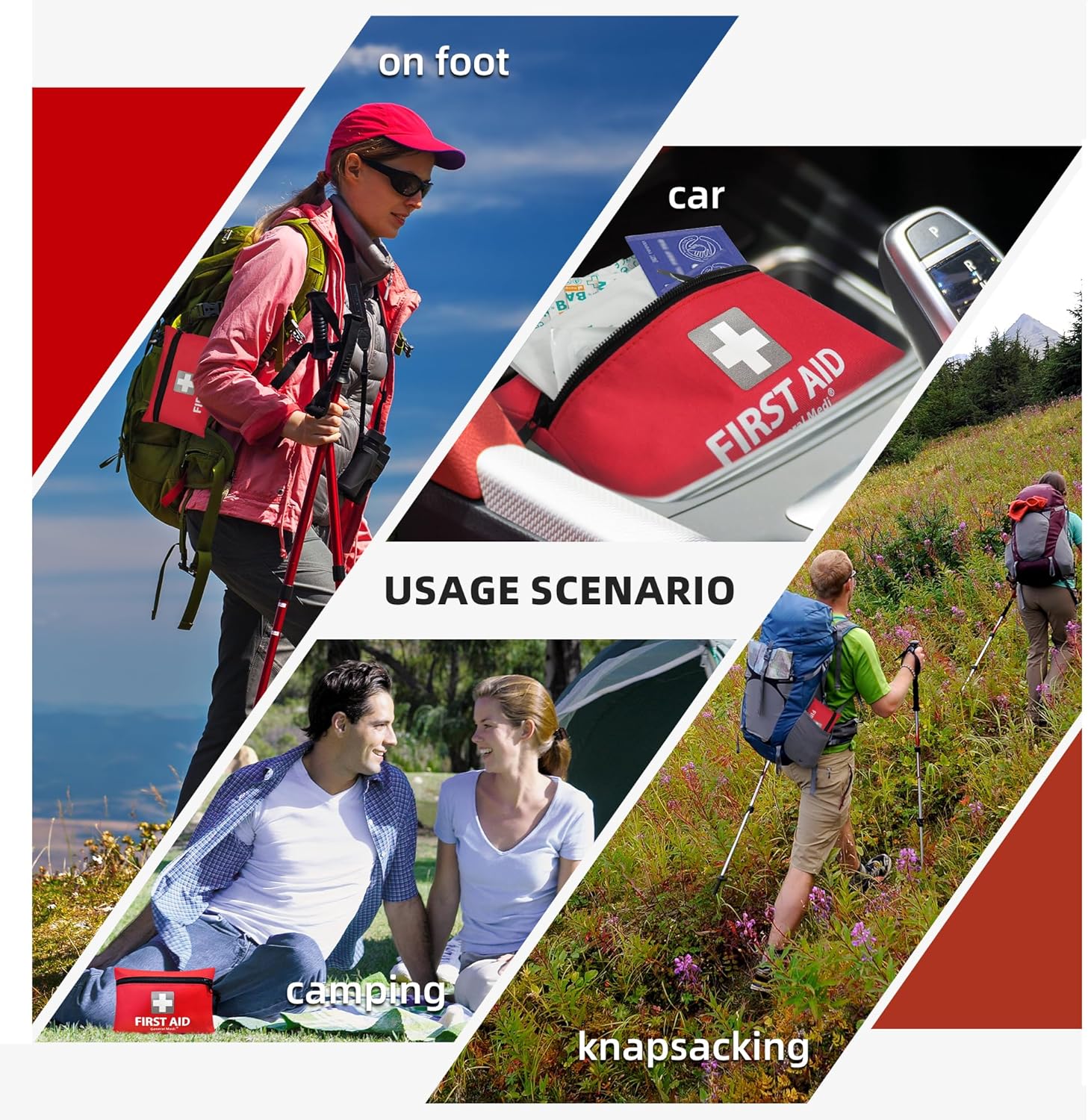
Rather than guess, here is what the last 100 verified reviewers were actually using it for:
Weekend car campers and family holidays. This is the biggest use case. Mrs S. bought hers specifically for a holiday and wrote: "It is a very well thought out kit. It looks small but it has got everything you need. I'm delighted." The kit lives in the glovebox, travels to the campsite, handles the inevitable cuts and midge bites, and comes home unused most of the time. For this use, the 92-piece format is ideal.
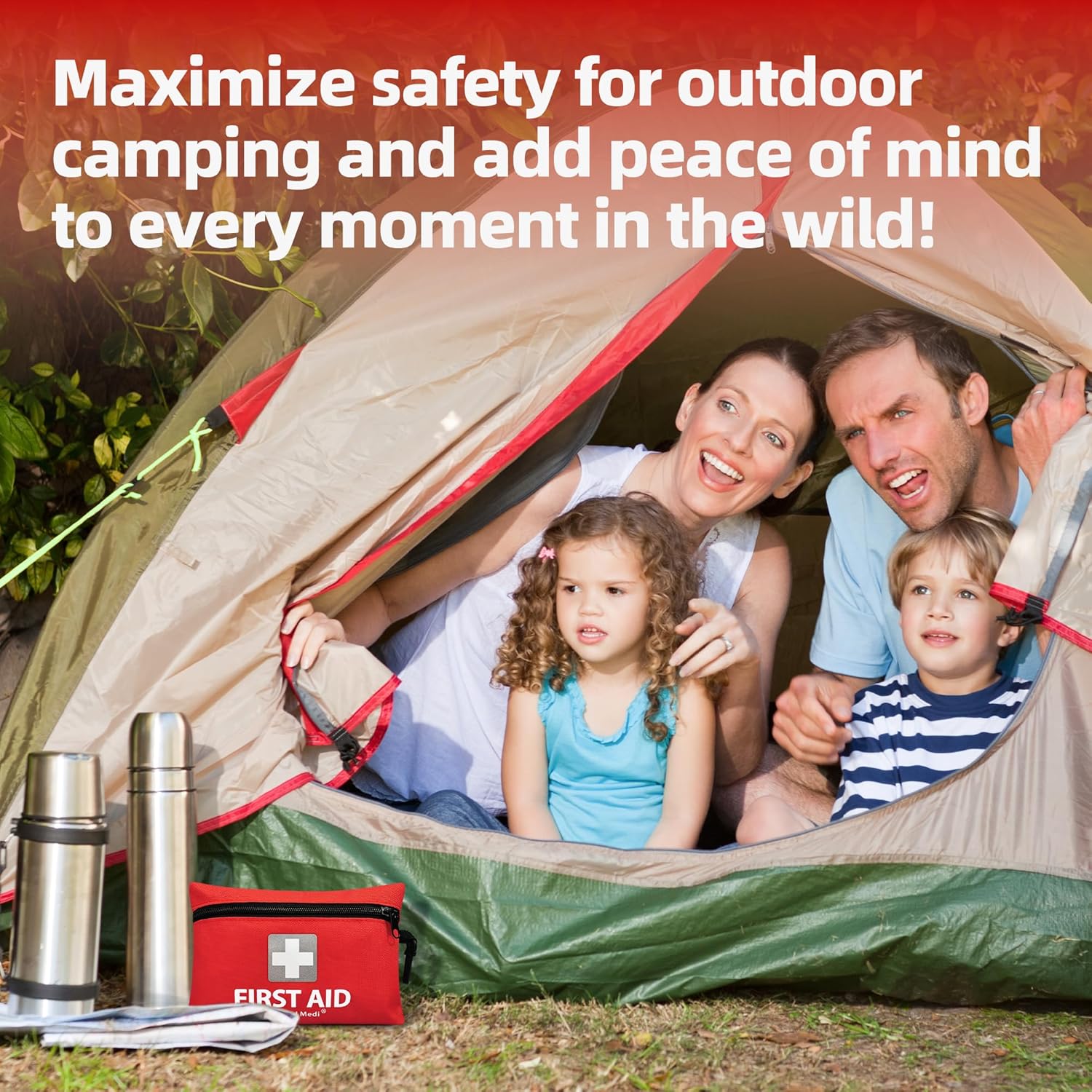
Van conversions and campervan life. Several reviewers mention buying it as part of a van build checklist. The clip and waterproof pouch matter here because space is tight and the kit needs to hang somewhere obvious rather than buried in a drawer. The nurse's caravan hookup story also lives in this category.
Backpackers, walkers and wild campers. The weight wins the day. At 170 grams it adds almost nothing to a multi-day pack, and the included plasters, scissors and tweezers cover the injuries you actually get on a long walk. One climber, S. Patel, put the tweezers to immediate use pulling thorns out from under a mate's nails after he fell into a thornbush.
Scouts, DofE personal kits and Cadet groups. Multiple reviewers mention buying several for children heading into youth outdoor programmes. The first aid guide leaflet inside is useful for younger users who may not know how to dress a wound yet.
Travellers and holidaymakers. Abroad, on car trips through Europe, on weekends away. Ally used it after badly injuring a toe dancing abroad in open-toed heels and cleaned and dressed the wound multiple times from the kit's contents. Mrs L Wilkin used hers after knocking her leg and bleeding heavily on holiday. A lot of reviewers mention throwing it in a hand luggage bag, though see the airport note in the next section.
Gifts. Grandparents buying for new drivers, nieces heading to uni, grandsons starting camping, people about to travel solo. Because the price sits under a tenner and the pouch looks properly considered rather than tacky, it gives well.
The Honest Bits: Complaints Worth Knowing About
Across 100 recent verified reviews, the negative feedback was thin but worth pulling out. One three-star reviewer flagged that the contents are "made from PRC" (China) and that the build quality matches the price, in their view not quite hospital grade despite the marketing language. That is a fair correction. The ISO13485, CE and FDA certifications are real and the items function as intended, but "hospital grade" in the product copy is stretching things. These are consumer first aid supplies, not the sterile-packed kit a paramedic would pull out of a frontline ambulance.
A two-star review complained about late delivery, which is an Amazon logistics issue rather than anything to do with the kit. Two one-star reviews simply said "poor quality" and "very disappointed" without specifics, which is hard to act on.
One practical tip came from a frequent flyer: the small eyewash vial counts as a liquid for airport security, so you need to remove it or pack it in your main hold luggage rather than carrying the whole kit through as hand baggage. Worth knowing if you are taking this on a flight rather than a UK campsite.
One reviewer also wished the red pouch was slightly larger so items could come out and go back in without rearranging. That is the unavoidable trade-off of a compact design and if you have ever tried to repack a Swiss Army knife into its original sheath you will know the feeling. Most people settle into a packing routine after a few uses.
At £8.85, The Maths Is Almost Silly
A single packet of blister plasters from Boots runs you around £4. A basic roll of first aid tape is £3. Tweezers from a high street chemist are £2 to £4. Add a foil emergency blanket, a pair of proper scissors, a bandage and a tourniquet on top, and you are well past £20 without even counting the pouch or the waterproofing. The General Medi kit undercuts that by a wide margin and bundles everything into a ready-to-grab package.
That price is why reviewers talk about the kit as a "bargain" so often. R B. wrote: "For £6.75 you can't go wrong!" (they paid a previous lower price) and went on to say "Unless your planning on doing some home surgery, this is ideal." At 10p per piece on the current price, even if some of the items feel basic, the rest justify the spend on their own. For anyone who has been camping for years without a proper kit because building one felt like too much faff, this removes the excuse entirely. You open one box, the job is done, and the kit is waterproof, clipped to your rucksack and certified for sale in the UK.
Amazon is running a 5 percent Subscribe and Save discount that brings it down to £8.41, plus a "save 5 percent on any 4" promo if you want to buy a stack of them for the car, caravan, glovebox and kitchen drawer. The kit is fulfilled by Amazon with next day Prime delivery, so if you are heading off this weekend you can have it tomorrow.
The Verdict
For £8.85 the General Medi 92-piece mini first aid kit is the closest thing to a default answer in the camping first aid category. It is small enough to actually travel with you rather than sit in a cupboard, comprehensive enough to handle everything from a sliced finger to a blister to an emergency cable repair, and certified to real international standards. The nurse-and-caravan story is the outlier that makes the point: if it can hold up to improvised use that the kit was never designed for, it will absolutely cope with the cuts, scrapes, splinters and bites that are the reason you actually packed it.
Where it falls short is at the edges. Trauma response, large group expeditions and serious wilderness use need bigger, specialised kits. "Hospital grade" in the marketing copy is generous. And the eyewash is an airport liquids hassle. None of that knocks the core offer: a compact, waterproof, well-specced personal first aid kit at a price that makes buying one for every car, tent and rucksack a no-brainer.
Our rating: 4.5 out of 5. A point off the top for the marketing language and the slightly cramped repacking, but everything else lands. If you are heading out for a UK camping season, the Lake District, a festival summer, or just throwing together a van build, this is the one to get.
General Medi Mini First Aid Kit (92 Pieces)
Amazon's Choice, 8,491 reviews, 4.7 stars. A compact, waterproof 92-piece first aid kit with ISO13485, CE and FDA certified contents. The default answer for UK campers, van lifers, backpackers and festival-goers.