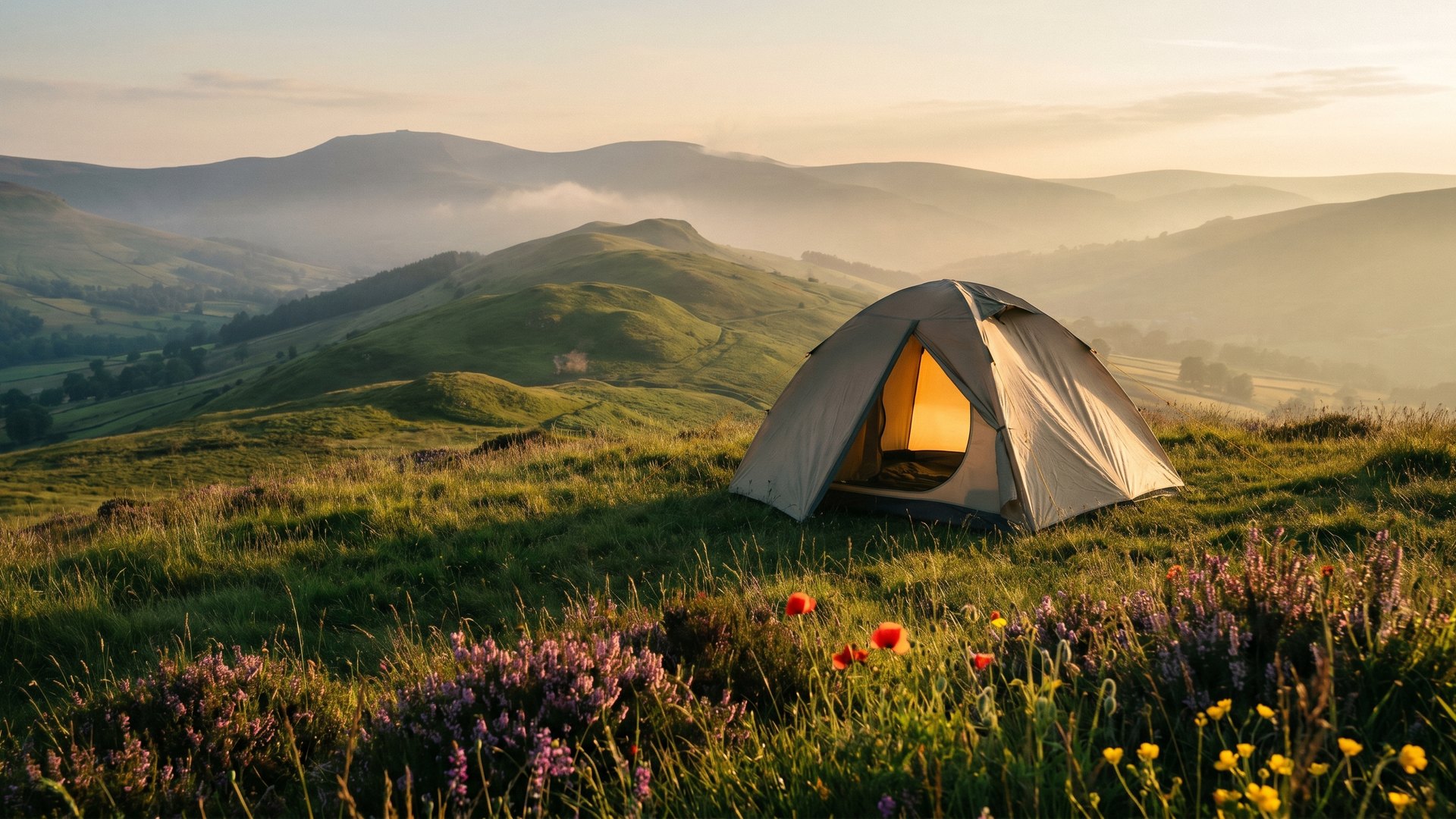
Can I use a summer sleeping bag in October UK: what the comfort rating and the forecast decide
A summer bag is typically rated for comfort around 10 degrees, and a typical October night in lowland England sits near 6. A liner, a proper mat and a hot water bottle close that gap, but only up to a point. Here is how to read your bag and the forecast before you decide.
We earn commission from qualifying Amazon purchases. It costs you nothing and does not affect what we recommend.
Quick answer
Yes, on a mild October night on a lowland site, if the comfort rating on the bag is at or below the forecast overnight low once you add a fleece liner, a mat with an R-value of 3 or more and a hot water bottle. Below 3 degrees, on high ground, or if you sleep cold, use a three-season bag.
The question "can I use a summer sleeping bag in October UK" has a date in it, but the date is the least useful part. October on a sheltered Cornish site and October at 400 metres in the Cairngorms are different months. What settles it is the number on the bag's label, what is under the bag, how you sleep, and the overnight low for the actual field you will be lying in.
What to check before you trust the bag
The comfort rating, not the season number
Most bags sold in the UK carry three temperatures from the EN 13537 or ISO 23537 test: comfort, limit and extreme. Comfort is the only one to plan around. Limit is a curled-up, shivering-but-safe night, and extreme is a survival figure, not a camping temperature.
The season number on the box is marketing, not a test result. A bag can say "3-4 season" on the front and 5 degrees comfort in the small print, which is a warm summer bag by any honest reading. Our review of the SWTMERRY bag, which says winter on the label and 5 degrees in the small print, and the MalloMe, sold as 3-4 season and really a summer bag, are both examples. No rating printed anywhere? A synthetic bag under a kilogram with thin fill and no hood is a summer bag whatever the packaging says.
Fill and construction
Squeeze the bag flat and let go. A summer bag lofts back to a couple of centimetres; a three-season bag lofts to a good deal more, and that trapped air is the insulation. A cinchable hood, a draught collar and a baffle along the zip are the three features that keep warm air in, and most summer bags have none of them. Fill type matters less than fill amount for one night: synthetic keeps working when damp, down lofts more per gram but collapses wet.
Whether you sleep cold
The comfort rating is measured for an average woman and the limit for an average man, which is why one couple in the same bags can have completely different nights. If you reach for a jumper indoors, plan for a bag rated a few degrees below the forecast. Tired, hungry or damp after a long day drops your effective rating too.
The forecast for the site, not the nearest town
Town forecasts sit a degree or two warmer than the fields outside them. Temperature falls by roughly one degree for every 150 metres of height, and on a clear, calm night cold air pools in valley bottoms, so a riverside pitch runs colder than the forecast minimum. The signal to watch is a clear sky with light wind after a dry day: that is the frost night. Cloud and a breeze keep it mild even in late October.
The mat, and where you are sleeping
The ground takes more heat from you than the air does, and the fill under your body is squashed flat, so the mat does most of the work down there. Mats carry an R-value: 1 to 2 is a summer figure, 3 to 4 covers a typical UK autumn, and 5 or more is for frost. A summer bag on a thin foam mat is the most common reason people wake up cold in October, and swapping the mat does more than swapping the liner.
A campervan or car sits a few degrees warmer than a tent and keeps you out of the dew; a small tent inner is warmer than a large one; a bivvy on open ground is the coldest option and no place for a summer bag past September.
September to January, month by month
The figures below are typical lowland England overnight lows drawn from Met Office long-term averages, given as ranges because they move by two or three degrees between the south coast and the north and by a fortnight between years. Scotland, Wales and anywhere above 300 metres runs two to three degrees colder again. They frame the answer; the forecast for the site settles it.
September
Nights are still mild, typically 9 to 10 degrees, and a summer bag with a liner is fine for most people on most sites. The first ground frosts appear in Scotland and the northern hills in the last week, so take the hot water bottle anyway.
October
This is the month the question is really about. Typical lows sit around 6 to 7 degrees in lowland England and 4 to 5 in Scotland, with the first air frosts arriving inland from mid-month. Darkness runs for 13 hours or more by the end of it, a long time to lie in a bag that is only just warm enough. A summer bag with a comfort rating of 5 to 8 degrees, plus the measures below, will do for a mild forecast; a bag rated 10 degrees or above needs a very mild night and a warm sleeper.
November
Lows drop to 3 or 4 degrees and frosts become regular. A summer bag stops being a sensible choice in a tent, though it still works in a campervan with a duvet over the top. Our guide to camping over Bonfire Night in November covers which sites stay open and what the bag needs to be rated for.
December and January
Typical lows of 1 to 3 degrees, with hard frosts and minus figures anywhere inland. A three-season bag with a comfort rating of 0 degrees or below is the minimum in a tent, a four-season bag on the hills. If you have been getting by with blankets, our note on buying a sleeping bag on Boxing Day covers what actually gets discounted.
Making a summer bag work in October
Do these in order. The first two matter most.
1. Check the forecast the day before
Take the overnight low for the nearest village, subtract a degree for the field and one per 150 metres of height, and two more if the sky is forecast clear and calm. If the result is within about five degrees of your bag's comfort rating, the measures below will close the gap. If not, skip to the next section.
2. Put a proper mat under the bag
Use a mat with an R-value of 3 or more, or stack two: closed-cell foam underneath and an inflatable on top adds their values together. With only a thin foam mat, lay spare clothes or the emptied rucksack under your torso and hips.
3. Add a fleece liner
A fleece liner adds a noticeable few degrees and keeps the bag clean. Silk and cotton liners add much less warmth. Put the liner in before you get in rather than fighting with it in the dark.
4. Sleep in dry base layers, a hat and socks
Change out of the day's clothes completely. A dry base layer, a warm hat and clean socks are the right amount; a summer bag has no hood, so the hat is doing the hood's job. A bulky jacket inside the bag compresses the fill and leaves you colder.
5. Fill a hot water bottle before bed
Fill it half an hour before you turn in and put it in the bag at your feet or against your stomach, inside its cover or a sock. Our guide on when to start using a hot water bottle camping covers the temperature at which it stops being a luxury and becomes the plan.
6. Pitch and ventilate with the cold night in mind
Pitch on slightly higher ground rather than in the hollow at the bottom of the field, door away from the wind. Leave the vents partly open; a sealed tent makes condensation worse and a damp bag is a cold bag. Keep the foot of the bag off the inner wall, where the dew collects.
7. Eat before bed
A hot meal and a warm drink an hour before bed give your body fuel to burn through the night, and a full bladder makes you colder, so deal with that too.
8. Bring a top layer for the small hours
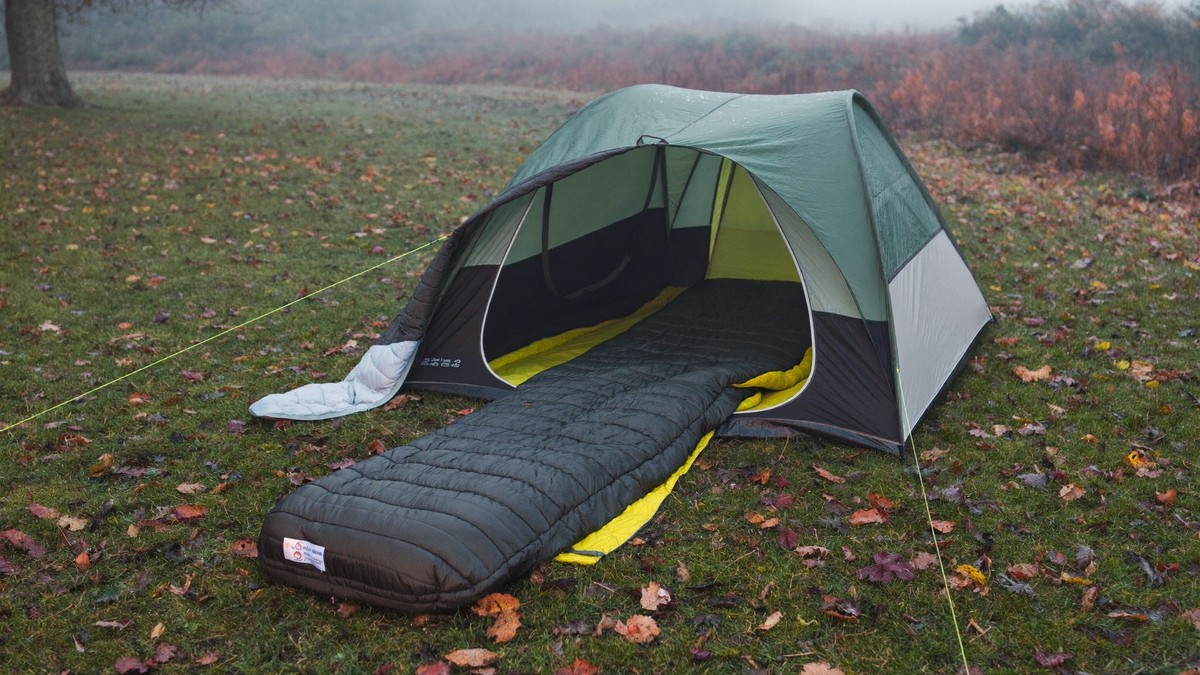
Pack a fleece blanket, a second bag opened out, or a duvet if you are car camping, and lay it over the summer bag at bedtime. For the tent side of the problem, our six steps to staying warm in a tent goes into pitch, ventilation and layering in more depth.
When to stop and use a warmer bag
Stacking liners and blankets becomes more faff and weight than carrying the right bag sooner than most people expect. Switch to a three-season bag when any of these apply: the forecast low is below 3 degrees; you sleep cold; the site is above about 300 metres or on an exposed coast; you are in a bivvy; or you are out for more than one night, because a second cold night is far worse than the first.
A budget bag sold as 3-4 season, such as the Voyager sleeping bag, is a real step up from a true summer bag. Read its comfort figure in the small print before you rely on it, for the reasons above; our review of the Voyager covers where it sits between campsite and spare room. If you camp more than a couple of October weekends a year, a proper three-season bag with a comfort rating of 0 degrees or below is the purchase, not another liner.
What goes wrong on a cold night, and what to do
You wake cold at three in the morning. Do these in order and stop when you are warm: eat something, put the hat back on, refill the hot water bottle if you can use the stove safely, lay every spare item of clothing over the bag, and push the rucksack under the foot of the mat. Most cold wake-ups are fixed by the first two.
The bag is damp by morning. Dew and condensation soak the ends where the bag touched the tent wall. A synthetic bag still insulates when damp; a down bag does not and must be dried before the next night. Air it over the tent in the first dry hour and store it loose between nights.
Shivering that does not stop. If eating, layering and the hot water bottle have not settled it within twenty minutes, get up, walk about, make a hot drink, and use the car or a heated toilet block if there is one. Shivering that turns into confusion or clumsiness is early hypothermia; the night is over at that point, warm up properly and do not go back into the same bag.
The zip leaks cold along its length. Summer bags rarely have a zip baffle. Sleep with the zip side down against the mat and tuck a folded fleece along the inside of it.
Frequently asked questions
What temperature is a summer sleeping bag good for?
Most bags sold as summer or one-season bags carry a comfort rating between 8 and 12 degrees, which means a comfortable night at that air temperature and a cold one a few degrees below it. Treat the comfort figure as the honest number; the limit figure is a shivering-but-safe night and the extreme figure is a survival number, not a plan.
Does a sleeping bag liner really add warmth?
Yes, but less than the packaging suggests. A fleece liner adds a noticeable few degrees; silk and cotton liners add much less and are mainly there to keep the bag clean. A liner cannot turn a 10 degree bag into a 0 degree bag, and no liner fixes a thin mat.
Is a budget 3-4 season bag warm enough for October?
Some are, and the season number on the box will not tell you which. Look for the comfort rating in the small print: a bag sold as 3-4 season with a 5 degree comfort figure is a warm summer bag, not an autumn one. The SWTMERRY and MalloMe bags reviewed on this site are both examples of that gap.
Can I use two sleeping bags together?
Yes, and it works well on a one-off cold night. Put the thinner bag inside the warmer one, or open the second bag out and lay it over the top as a quilt. Two nested summer bags will not equal a proper three-season bag, but they add several degrees over one bag alone.
Is October too cold for camping in the UK?
No, for most lowland sites it is one of the better months: quieter pitches, fewer midges and long evenings. The catch is the night, around ten degrees colder than in July, and the dew, which soaks anything left outside. Plan for the low and October camping is very pleasant.